

By Abdifataah Hussien Osman Hanfi
For more than three decades, Somaliland has stood as a paradox in international relations: a state that fulfills nearly all the requirements of sovereignty—peace, stability, democratic governance, and functioning institutions—yet remains excluded from formal recognition by the global community. Since its reassertion of independence in 1991, Somaliland has built a society that values justice, participation, and self-determination, offering a rare model of stability in the often turbulent Horn of Africa.
At the heart of this achievement is a generation of young people who represent both Somaliland’s greatest strength and its loudest voice. More than 70% of Somaliland’s population is under the age of 35. This demographic reality has not only shaped the nation’s social and political landscape but also made youth the leading advocates for Somaliland’s rightful place among the family of nations.
Globally, youth are rising to demand justice and inclusion from climate action movements in Europe to pro-democracy campaigns in Africa and Asia. Somaliland’s youth see themselves as part of this wave of generational change. They are determined to ensure that their country’s call for re-recognition is not lost in the noise of global politics. Instead, they frame it as a moral and generational demand: the recognition of peace, democracy, and resilience against the odds.
Somaliland’s case for re-recognition is not just about restoring international legitimacy to a nation unjustly excluded; it is about amplifying the voices of a new generation that refuses to inherit silence. These young Somalilanders are prepared to be both guardians of their nation’s achievements and ambassadors of its aspirations.
Re-recognition, not recognition
Somaliland’s journey toward rerecognition begins with its unique history. Formerly a British protectorate, Somaliland gained full independence on 26 June 1960, becoming the 12th African country to join the international community as a sovereign state. Within five days, however, Somaliland voluntarily united with the newly independent Italian Somalia to form the Somali Republic. The dream of pan-Somali unity quickly turned into disillusionment, as political power became centralized in Mogadishu and the promises of equality between the two regions were broken.
Dictatorship, marginalization, and ultimately atrocities against Somalilanders marked the following decades, particularly during the 1980s under Siad Barre’s regime. The air bombardment of Hargeisa, the capital of Somaliland, resulted in the deaths of tens of thousands of people, an event survivors often refer to as “the Hargeisa Holocaust.” These experiences cemented in the minds of Somaliland’s people that their aspirations for justice and self-rule could not be fulfilled under a unitary Somali state.
In May 1991, following the collapse of Somalia’s central government, Somaliland declared the restoration of its independence, not as a new state, but as the reassertion of sovereignty it had briefly held in 1960. Since then, Somaliland has charted its path, building democratic institutions, maintaining relative peace, and holding multiple competitive elections observed by international monitors.
Unlike its southern neighbor, which has struggled with state collapse, terrorism, and corruption, Somaliland has developed into a functioning democracy with peaceful transfers of power. Its people highlight this contrast to argue that Somaliland is not seeking “recognition” as something new but rather “re-recognition” of a sovereignty it has already earned, lost, and reclaimed through struggle and resilience.
Today, Somaliland’s historical narrative forms the foundation of its political argument: that justice demands acknowledgement of its unique path, its suffering, and its achievements. For its youth, who did not experience the devastation of the 1980s but live with its legacy, this history is not a distant past; it is the reason they believe their nation deserves a rightful seat at the international table.
Youth-Led Somaliland
With more than 70% of Somaliland’s population under the age of 35, the youth are not just the future of the nation; they are its present reality. This demographic force has deeply shaped Somaliland’s politics, economy, and society. Unlike many of their counterparts across the Horn of Africa, Somaliland’s youth have grown up in a political environment where their voices matter, where voting is a right rather than a privilege reserved for a small elite.
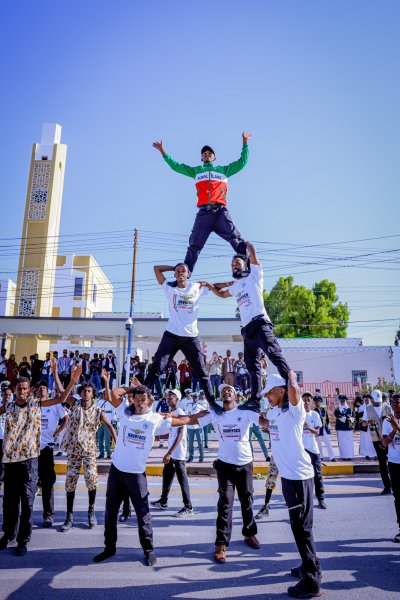
Since the early 2000s, Somaliland has held a series of competitive, internationally observed elections in which young people have played a defining role. For many Somalilanders, the memory of casting their first ballot as teenagers remains a source of pride. This early exposure to democracy created a culture of civic engagement that extends beyond voting: youth are active in political debates, grassroots campaigns, civil society organizations, and social entrepreneurship.
The result is a generation that understands not only the value of democracy but also its fragility. Unlike in Somalia, where leaders are chosen through indirect processes dominated by clans and elites, Somaliland’s youth have tasted the power of “one person, one vote.” They see themselves as guardians of this democratic tradition and recognize that it sets them apart in a region where democratic practice is often absent or manipulated.
Beyond politics, youth are also transforming Somaliland’s economy. From small technology startups in Hargeisa to diaspora-linked enterprises in Berbera and Borama, young entrepreneurs are finding innovative ways to create jobs and opportunities despite the barriers of non-recognition. At the same time, student associations and youth-led NGOs have become critical platforms for leadership, advocacy, and international engagement.
For Somaliland’s young people, governance is not an abstract concept debated in parliaments. It is a lived reality, one that they actively shape through participation, accountability, and vision. Their demand for re-recognition, therefore, is not just about restoring sovereignty; it is about safeguarding the democratic experiment they have helped sustain for over three decades.
When viewed against the backdrop of the Horn of Africa, Somaliland’s youth occupy a unique position. In Somalia, Ethiopia, and other neighboring states, young people often face structural exclusion from political processes. They live in environments where democratic choice is limited, corruption is rampant, and insecurity undermines their ability to dream of a stable future. For many, political participation is reduced to clan patronage or protests against entrenched elites.
By contrast, Somaliland’s youth have been active participants in shaping leadership through direct elections. The ability to cast a ballot at 15 or 16, an experience denied to countless peers in the region, has given them an early understanding of the power of accountability and the legitimacy that flows from popular mandate. In this sense, Somaliland’s young generation is more politically empowered than many of the leaders currently governing Somalia, who themselves have never faced direct elections.
On the global stage, youth are increasingly becoming the moral voice of justice and reform. From the climate strikes in Europe and North America to pro-democracy protests in Asia and Africa, young people have forced governments and international organizations to listen. Somaliland’s youth see themselves as part of this broader movement. They identify with global struggles for justice and equality, but they also carry a demand that is uniquely their own: the re-recognition of their homeland.
What connects Somaliland’s youth to these global movements is not only shared values but also shared methods. Through digital platforms, they amplify their stories, forge alliances, and connect with like-minded youth worldwide. They tell the world that their struggle is not just about lines on a map but about dignity, justice, and the universal right to self-determination.
In aligning their cause with global youth activism, Somaliland’s young people remind the world that the fight for re-recognition is not an isolated campaign. It is part of a generational demand for justice, echoing across continents and uniting young voices in a call for fairness, equality, and peace.
Somaliland vs. the World
 Somaliland’s pursuit of re-recognition has not been defined only by its achievements but also by the powerful forces working against it. While its people have built peace and democracy from the ground up, the international stage has often been hostile or indifferent to its aspirations. The struggle is not simply legal or political; it is deeply entangled in global geopolitics.
One of the most persistent challenges comes from Somalia’s federal government, which continues to claim sovereignty over Somaliland despite more than three decades of separate governance. Backed by certain international actors, Somalia insists that Somaliland is merely a breakaway region. This narrative, however, ignores the fact that Somaliland voluntarily united with Somalia in 1960 and has since reasserted the sovereignty it already possessed.
Beyond Somalia, external powers such as China, Turkey, and Egypt have sought to block Somaliland’s recognition for their own strategic reasons. China, in particular, opposes Somaliland’s growing partnership with Taiwan, viewing it as a direct challenge to Beijing’s “One China” policy. Turkey, with deep investments in Somalia, fears that recognizing Somaliland would complicate its influence in the Horn. Egypt, motivated by its rivalry with Ethiopia, resists any geopolitical shift that could alter the balance of power in the region.
Meanwhile, the African Union (AU) has been reluctant to break with its principle of maintaining colonial borders. Despite Somaliland’s unique case as a state that had already been independent in 1960, the AU fears that recognizing it might set a precedent for other separatist movements across Africa. This reluctance has left Somaliland in diplomatic limbo, where its success is acknowledged but not formally embraced.
Yet, Somaliland has not been without friends. Last year, United States Congressman Scott Perry introduced a bill to recognize Somaliland as an independent state. The United Kingdom, as the former colonial power, has quietly maintained close ties. The European Union and regional partners like Ethiopia have engaged pragmatically, particularly in trade and security cooperation. Most significantly, Taiwan has established a rare but powerful partnership between two unrecognized but functioning democracies. In late June 2025, Taiwan and Somaliland signed a landmark maritime security agreement aimed at enhancing cooperation in areas such as maritime safety, personnel training, and joint exercises.
These diplomatic struggles reveal that Somaliland’s case is not simply about recognition but about whose interests recognition serves or threatens. For Somaliland’s youth, this reality is both sobering and motivating: it reminds them that their struggle is uphill, but it also fuels their determination to ensure that justice is not forever hostage to geopolitics.
Somaliland’s future in motion
Despite the obstacles Somaliland faces on the international stage, its story is also one of opportunity. Recognition remains elusive, but the nation has already shown that it can build meaningful partnerships and contribute to regional and global stability. For Somaliland’s youth, these opportunities represent both hope and responsibility.
Economically, Somaliland occupies a strategic location along the Red Sea and Gulf of Aden, one of the busiest maritime routes in the world. The development of the Berbera Port, in partnership with international firms such as DP World, has the potential to transform Somaliland into a vital trade and logistics hub. For young people, this translates into jobs, business opportunities, and the chance to engage with global markets despite the limitations of non-recognition.
Diplomatically, Somaliland has demonstrated that recognition is not the sole measure of engagement. Its ties with Taiwan are a case in point, showing how shared values of democracy and resilience can forge bonds even in the absence of global consensus. Similarly, growing interest from the United States, the United Kingdom, the European Union, and Ethiopia suggests that Somaliland is increasingly viewed as a reliable partner in a volatile region.
Socially, the vibrancy of Somaliland’s youth creates fertile ground for innovation. From tech startups to creative industries, young Somalilanders are finding ways to bypass traditional barriers and connect with the global economy. Diaspora networks, fueled by educated youth abroad, continue to send back not only remittances but also knowledge, investment, and international connections.
Looking ahead, Somaliland’s future depends not only on external recognition but also on the continued resilience of its people. The demand for re-recognition is both a political cause and a generational movement. For youth, it is about ensuring that their voices are heard, their rights respected, and their country allowed to contribute positively to the world.
The future of Somaliland is therefore not one of isolation but of participation. Whether through trade, diplomacy, or cultural exchange, the youth are positioning themselves as ambassadors of a nation that has already proven it can govern itself, build peace, and aspire to democratic ideals. What remains is for the world to acknowledge what Somaliland has already achieved and to embrace its youth as partners in building a brighter, more stable Horn of Africa.
As a member of Somaliland’s younger generation, I have matured within a society defined by peace, democracy, and the electoral right to choose our governance. Casting my inaugural vote as an adolescent offered a profound realization: my personal voice held significance, and I was actively contributing to the formation of my nation’s destiny. This hands-on engagement in democratic institution-building distinguishes our youth from many contemporaries across the Horn of Africa who are often deprived of such political agency. While a sense of achievement prevails, our pride is mixed with frustration. We have successfully maintained both peace and democratic principles without the necessary prerequisite of international recognition or membership in the United Nations.
Our communication to the global community is unequivocal: Somaliland is not requesting a favor but is demanding re-recognition as a right. Acknowledging our statehood is not an act of charity; it validates the sacrifices made and represents a crucial investment in a determined generation’s future. For us, this recognition is essential to safeguarding our identity, dignity, and a future in which our children inherit a nation that is respected, secured, and tranquil.
ABOUT THE AUTHOR
Abdifataah Hussien Osman Hanfi is a social activist, data analyst, writer, program presenter, and political analyst based in Hargeisa, Somaliland. He can be reached at hanfiresearch@gmail.com
